
A defense of one of cinema’s most controversial adaptation decisions
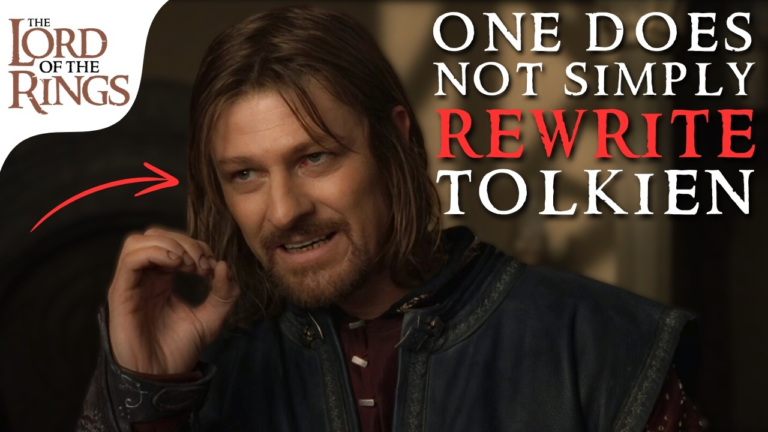
Since the release of Peter Jackson’s Lord of the Rings trilogy, few topics spark more heated debate among Tolkien fans than the exclusion of Tom Bombadil. The name has become almost a password for Middle-earth enthusiasts, with many criticizing Jackson and his co-writers for omitting this enigmatic character from their adaptation. While Jackson might argue that “just because they didn’t show it doesn’t mean it didn’t happen,” the evidence clearly suggests the hobbits never visit Crickhollow, traverse the Old Forest, or encounter Tom Bombadil and Goldberry before reaching the Prancing Pony.
It’s become nearly taboo to suggest that Peter Jackson made the right choice in excluding these events from The Fellowship of the Ring. However, I firmly believe that including Tom Bombadil and the four chapters between Bucklebury Ferry and Bree would have been a massive mistake for the film adaptation.
Want to watch this episode instead of reading? Check out the video below or CLICK HERE to watch on YouTube!
What Happens in the Missing Chapters: A Complete Summary
For those who need a refresher on what Jackson’s films omitted, let’s dive into chapters five through eight of The Fellowship of the Ring.
Chapter 5: A Conspiracy Unmasked
After escaping the Black Riders via Bucklebury Ferry, our four hobbits arrive at Frodo’s new home in Crickhollow, where Fatty Bolger greets them. Following dinner, Merry, Pippin, and Fatty reveal they know about the Ring—much to Frodo’s astonishment. Merry had previously witnessed Bilbo disappearing and reappearing, spotting something shiny going into his pocket. Combined with their close friendship with Frodo and Sam’s inside information, they’d pieced together the truth.
Realizing he shouldn’t journey alone and remembering Gildor’s advice about taking willing companions, Frodo agrees to let them join. The hobbits reveal their master plan: Fatty will remain at Crickhollow to impersonate Frodo, maintaining the illusion that he’s still in the Shire while also watching for Gandalf. Despite Fatty’s warnings about the dangerous road ahead, the four hobbits set out toward the Old Forest, with Merry arguing it’s safer than facing Black Riders on the main roads.
Chapter 6: The Old Forest
Wandering through the mysterious forest, the hobbits catch glimpses of the Barrow Downs—ancient burial mounds rising from grassy hills. Following a river deeper into the woods, they’re overcome by an unnatural drowsiness. Merry and Pippin settle between the roots of an ancient willow tree, while Frodo feels the tree deliberately trip him.
Sam, recognizing the supernatural nature of their sleepiness, fights to stay awake and finds Frodo. Together, they discover that Merry and Pippin have been absorbed into Old Man Willow, trapped within the tree itself. Their attempts to free their friends through kicking and threatening fire only result in muffled cries from within, as the tree threatens to consume Merry and Pippin entirely if harmed.
Frantically seeking help, Frodo runs down the path calling out—only to hear singing approaching. A jolly figure bounds down the road, commanding Old Man Willow to release the hobbits. As their friends emerge safely, they meet their savior: Tom Bombadil, a mysterious being who speaks almost entirely in song and immediately invites them to his home.
Chapter 7: In the House of Tom Bombadil
At Tom’s house, the hobbits meet his wife, Goldberry (the River Daughter), learning that Tom’s rescue was pure chance—he’d been collecting water lilies for her. Goldberry describes Tom as “master of wood, water, and hill.” After sharing a meal, each hobbit except Sam experiences nightmares during their sleep.
The next day brings rain, which Tom calls “washing day,” trapping them indoors to hear his tales of Old Man Willow, the Barrow Downs, and ancient history. When the weather clears, Frodo opens up to Tom and freely offers him the Ring. Tom places it on his finger but remains visible, then makes it vanish and reappear before returning it casually. When Frodo tests the Ring’s authenticity by putting it on, Merry confirms his invisibility—but Tom sees him clearly and tells him to remove it.
Tom instructs them on tomorrow’s route and they retire for the night.
Chapter 8: Fog on the Barrow Downs
Departing Tom’s home, the hobbits head toward the Barrow Downs via the safe western route Tom recommended. He’d also taught them a rescue song to summon him if needed. They rest on the cool stones of the ancient burial mounds, but awaken to find themselves separated by thick fog.
Frodo searches for his companions but instead hears a voice declaring “I am waiting for you!” A cold figure grasps him, and he loses consciousness. He awakens in a dark chamber alongside his three friends, who lie unconscious with a sword across their necks. As an incantation echoes around them and a hand reaches for the sword’s hilt, Frodo grabs a weapon from the surrounding treasure and strikes the hand, shattering his blade.
Unable to wake his friends through conventional means, Frodo remembers Tom’s song and calls for help. Tom’s voice responds from outside, the barrow wall collapses, and he bounds in to drive away the Barrow-wights through song, just as he’d defeated Old Man Willow.
Tom retrieves their scattered ponies and escorts them to the edge of his domain, directing them to the Prancing Pony in Bree where innkeeper Barliman Butterbur will assist them. After bidding farewell to Tom, they travel onward and reach Bree’s outskirts as night falls.
The Mystery of Tom Bombadil: Who Is He Really?
Tom Bombadil goes by many names throughout Middle-earth. The Elves call him “Oldest and Fatherless,” while Dwarves know him as “Forn” (meaning “belonging to the ancient days”). When Frodo asks Goldberry who Tom is, she simply replies, “He is”—a statement that, given Tolkien’s Catholic background, seems to echo divine mystery despite the author’s claims of excluding religious influence from his work.
Many fans theorize that Tom might be Middle-earth’s god, though Tolkien’s established pantheon makes this unlikely. Perhaps Tom and Goldberry represent Adam and Eve figures—present since creation’s dawn, masters of all creatures and lands within their domain.
However, Tolkien himself rejected definitive explanations for Tom’s nature. When questioned about Tom’s origins, Tolkien stated: “even in a mythical Age there must be some enigmas, as there always are. Tom Bombadil is one.” The author intentionally created aspects of his world that remained mysterious even to him, with Tom serving as a deliberate enigma that defied complete understanding.
Why Excluding Tom Bombadil Was the Right Choice
The decision ultimately comes down to two crucial words: Plot Progression.
Many Tolkien enthusiasts get caught up in Tom’s mystique and assume he’d translate brilliantly to film. However, making Tom cinematically “epic” would require fundamentally rewriting Tolkien’s portrayal of the character. Tolkien himself acknowledged that Tom doesn’t serve an important narrative role—he was included merely to communicate an ineffable feeling the author couldn’t express in precise terms.
When creating an adaptation within strict time constraints, filmmakers must distinguish between what’s essential to the plot and what isn’t. Tom Bombadil simply isn’t essential.
The Sidequest Problem
Everything from Bucklebury Ferry to Bree reads like sidequests in a larger RPG—completely irrelevant to the fight against Sauron. The enemies in these chapters aren’t even connected to Sauron’s influence. While Saruman represents a major subplot directly related to Middle-earth’s fate, Old Man Willow couldn’t care less about the Ring or Sauron’s existence. He simply dislikes walking creatures in his forest.
Tom’s entire domain exists like a snow globe outside Middle-earth’s temporal boundaries. These adventures make wonderful stories for hobbits to sing about later, but for audiences invested in the Ring’s journey from the Shire to Mount Doom, carnivorous trees and ancient burial grounds serve no narrative purpose.
The Tonal Shift Problem
Tom’s constant singing creates severe tonal inconsistencies. While the songs work beautifully in audiobook format, including these chapters in film would create jarring shifts from epic fantasy to musical theater and back again.
Compare this to Aragorn’s song about Beren and Lúthien—a perfect example of incorporating Tolkien’s poetry without disrupting the film’s tone. Tom’s jolly, carefree nature would undermine the gravity of Frodo and Sam’s impending journey. After building tension through Gandalf and Frodo’s discussions about the Ring and world’s end, audiences would encounter someone who defeats enemies through dancing and singing alone.
The message would essentially be: “Oh, you’ve got bows, swords, and magic staffs? Cool, I’ll just sing at them.”
The Adaptation Challenge
Tom’s inclusion presents an impossible choice: sacrifice film quality to maintain authenticity to Tolkien’s writing, or sacrifice Tolkien’s character to preserve film quality. Jackson’s adaptation required changing elements to fit the new medium—that’s literally what “adaptation” means.
We may soon see this challenge played out in Amazon’s The Rings of Power, which has announced Tom Bombadil’s inclusion. Once audiences witness that portrayal, they may better understand why adapting Tom to visual media presents such difficulties.
Character Analysis: The Enigma That Doesn’t Translate
Tom represents everything that works in literature but struggles on screen:
Literary Strengths:
- Embodies mystery and wonder
- Provides respite from mounting tension
- Demonstrates power beyond conventional understanding
- Offers philosophical depth about nature and time
Cinematic Challenges:
- No clear character arc or development
- Powers feel arbitrary rather than earned
- Constant singing disrupts narrative rhythm
- Philosophical complexity requires extensive exposition
- Complete immunity to the Ring’s influence undermines central threat
Timeline and Pacing Implications
Including Tom’s chapters would fundamentally alter the trilogy’s pacing. The Fellowship already runs nearly three hours; adding Tom’s sequence would require either:
- Extending runtime significantly – Risk losing audience engagement
- Compressing other essential scenes – Sacrifice character development elsewhere
- Splitting into additional films – Disrupt trilogy structure
Jackson’s version maintains forward momentum by moving directly from the Shire’s relative safety to Bree’s mounting dangers. Tom’s interlude would break this carefully crafted tension curve.
The Location Challenge
Tom’s domain exists outside normal Middle-earth geography and time. Translating this otherworldly quality to film would require either:
- Realistic approach: Loses the mystical, timeless quality
- Fantastical approach: Risks appearing cartoonish compared to the trilogy’s grounded aesthetic
The Old Forest and Barrow Downs, while atmospheric in text, would consume significant screen time without advancing the central plot.
Plot Integration Issues
Tom’s chapters create several narrative problems for film adaptation:
Ring Immunity: Tom’s complete immunity to the Ring’s power undermines its established threat level. If Tom can handle it casually, why not leave it with him? The books address this, but film audiences would likely find it unsatisfying.
Power Level Inconsistency: Tom easily defeats threats that challenge our heroes elsewhere, creating power scaling issues that would confuse movie audiences.
Isolated Relevance: Nothing from Tom’s chapters impacts later events, making their inclusion feel disconnected from the main story.
Conclusion: Adaptation as Art Form
Defending Peter Jackson’s exclusion of Tom Bombadil isn’t about diminishing Tolkien’s original work—it’s about understanding adaptation as its own art form. What works brilliantly on the page doesn’t always translate to screen, and filmmakers must make difficult choices to serve their medium effectively.
Tom Bombadil remains a beloved figure in Tolkien’s books, where his mystery and songs can flourish without compromising narrative momentum. Jackson’s films benefit from his absence, maintaining their focused journey from innocence to darkness without tonal disruptions or pacing issues.
The debate over Tom’s exclusion ultimately highlights the fundamental challenge of adaptation: honoring source material while creating something that works independently in a new medium. In this case, Jackson chose wisely, creating a trilogy that captures Middle-earth’s essence while telling a cinematically compelling story.
Whether Amazon’s upcoming portrayal of Tom Bombadil vindicates this position remains to be seen. Until then, we can appreciate both Tolkien’s enigmatic creation in the books and Jackson’s streamlined vision on screen—each perfect for their respective mediums.
What do you think? Was Jackson right to exclude Tom Bombadil, or do you believe the films lost something essential without him? Share your thoughts in the YouTube comments of this episode!
Ep. 6: The Real Fool of Middle-earth: How Barliman Butterbur Nearly Ended Frodo’s Quest