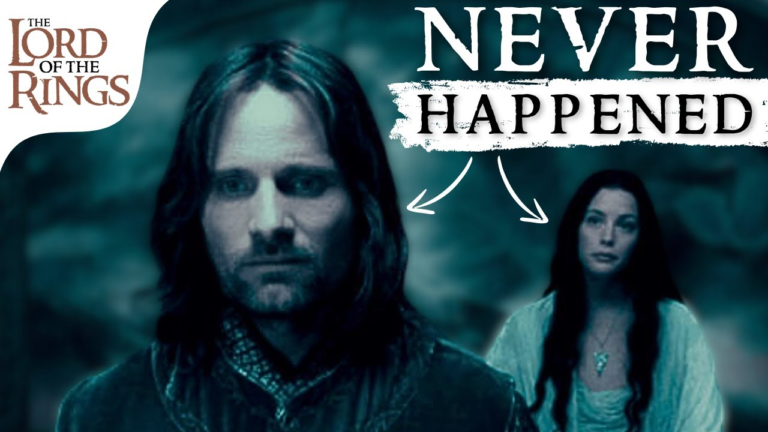

Did you know that in Tolkien’s original work, Bilbo volunteered to take the Ring to Mount Doom? Or that Boromir actually wanted Aragorn to return to Gondor as king? These are just a few of the many surprising differences between Peter Jackson’s film adaptation and Tolkien’s masterpiece that completely change our understanding of these beloved characters.
The Council of Elrond chapter in The Fellowship of the Ring serves as the epic saga’s true starting point. Unlike the movie’s brief 8-minute scene, Tolkien’s version spans over two hours in audiobook format, with the council taking an entire day. This pivotal chapter not only introduces the Fellowship but also provides crucial Middle-earth lore and backstory that the films simply couldn’t accommodate.
Want to WATCH instead of read? Check out the video below or CLICK HERE to watch on YouTube!
Movie Scene Recap: The Fellowship Forms
In Peter Jackson’s adaptation, the Council of Elrond unfolds as a condensed but dramatic sequence. Representatives from across Middle-earth gather in Rivendell to discuss the Ring’s fate. After Frodo presents the Ring, Boromir immediately shows his corruption by approaching it and suggesting Gondor could wield it as a weapon.
Gandalf responds by speaking in the Black Speech of Mordor, warning that this dark language will one day dominate Middle-earth. The tension escalates when Boromir dismisses Aragorn as “just a ranger,” leading Legolas to reveal Aragorn’s true identity as Gondor’s rightful king. Boromir’s bitter response – “Gondor has no king. Gondor needs no king” – sets up his character arc perfectly.
The scene culminates with Elrond declaring the Ring must be destroyed, Gimli’s failed attempt to break it, and Frodo’s brave offer to carry this burden. The other members of the Fellowship pledge their aid, while Sam, Merry, and Pippin emerge from their eavesdropping spot to join the quest.
Character Differences: Missing Voices and Changed Roles
Characters Present in the Book but Missing from the Movie
Several important figures from Tolkien’s council don’t receive speaking roles or identification in the film:
- Gloin (Gimli’s father): Actually does all the talking for the dwarves in the book, delivering crucial information about Moria and Sauron’s threats
- Erestor: Elrond’s chief counselor, seated beside him during the council
- Galdor: An elf sent by Círdan the Shipwright from the Grey Havens, who asks probing questions throughout the discussion
- Glorfindel: Present but doesn’t speak in the film version
The Bilbo Exception
The most significant character change involves Bilbo’s complete removal from the movie’s council scene. In the book, Bilbo plays a vital role, recounting his discovery and use of the Ring. The film’s decision to age him rapidly after giving up the Ring necessitated this change, but it removes an important voice from the proceedings.
Timeline Differences: From All Day to Eight Minutes
The most obvious difference lies in duration. Tolkien’s council spans an entire day, with Elrond speaking for hours about the Ring’s history. This extended timeframe allows for detailed discussions, questions, and the gradual building of consensus that feels more realistic than the movie’s rapid-fire decision-making.
Location: Rivendell Remains Unchanged
Fortunately, Jackson kept the council in its proper location. Rivendell serves as the perfect neutral ground for this momentous gathering, and the film’s depiction captures the appropriate gravitas of this sacred elven refuge.
Plot Changes: The Devil’s in the Details
The Summoning vs. Divine Timing
The movie suggests Elrond summoned everyone to Rivendell, but Tolkien’s version reveals a more organic gathering. Each representative independently sought Elrond’s counsel, with Boromir traveling 111 days to reach Rivendell. Their simultaneous presence represents divine timing rather than planned coordination.
Gloin’s Warning: Foreshadowing Moria’s Darkness
One of the most significant omissions involves Gloin’s opening testimony. In the book, he reveals that dwarves have been lost in Moria and that Sauron’s representatives have repeatedly approached the dwarves, seeking alliance and information about hobbits. This messenger’s increasingly threatening tone prompted Gloin to seek Elrond’s counsel, adding layers of urgency and foreshadowing that the movie lacks.
Boromir’s Character Assassination
The film’s portrayal of Boromir represents perhaps the most damaging change to Tolkien’s vision:
In the Movie:
- Immediately drawn to the Ring’s power
- Dismissive of Aragorn’s claim
- Declares “Gondor has no king. Gondor needs no king”
- Appears already corrupted before the journey begins
In the Book:
- Arrives due to prophetic dreams shared with his brother Faramir
- Volunteers for the dangerous journey to spare his brother
- Openly admits Gondor needs strengthening
- Encourages Aragorn’s return as king, seeing hope in the sword of Elendil
- Shows nobility and wisdom throughout the council
This change fundamentally alters our understanding of Boromir’s character arc, making his eventual fall less tragic and more predictable.
Aragorn’s Confidence vs. Fear
Book Aragorn carries the shards of Narsil like he’s been waiting for this moment, confident in his destiny. Movie Aragorn fears his heritage and reluctantly accepts his role, creating a different character journey entirely.
Missing Backstory Elements
Several crucial plot elements from the book never make it to screen:
- The Hunt for Gollum: Detailed explanation of how Aragorn and Gandalf tracked down Gollum
- Gollum’s Escape: Legolas reveals he came to Rivendell specifically to report Gollum’s escape from the Wood-elves
- Gandalf’s Full Story: Complete account of his encounter with Saruman, rescue by Gwaihir, and acquisition of Shadowfax
- Saruman’s Influence: Revelation that the King of Rohan was already under Saruman’s control
Dramatic Moments That Never Happened
The movie creates several dramatic moments absent from the book:
- Boromir never reaches for the Ring
- Gandalf never speaks the Black Speech
- Gimli doesn’t attempt to destroy the Ring (and doesn’t speak at all)
- No arguing breaks out among council members
- Merry and Pippin aren’t eavesdropping (only Sam is)
The Volunteer Moment: Bilbo’s Noble Offer
In Tolkien’s version, Bilbo volunteers first to take the Ring to Mount Doom. Boromir nearly laughs but stops when he realizes the council takes this offer seriously. Only after Gandalf explains that Bilbo’s part in the story is over does Frodo step forward, understanding this burden is his to bear.
The movie’s dramatic scene of Fellowship members pledging their weapons never occurs in the book, though this cinematic addition effectively visualizes the group’s formation for viewers.
The Heart of the Difference
The fundamental distinction between book and movie lies in tone and character development. Tolkien’s council emphasizes wisdom, deliberation, and the gradual recognition of necessity. Jackson’s version prioritizes drama, conflict, and visual storytelling.
Most importantly, the book’s Boromir emerges as a tragic hero whose later corruption becomes genuinely heartbreaking, while the movie’s version appears flawed from the start. This change ripples throughout the entire trilogy, affecting our understanding of nobility, corruption, and redemption in Middle-earth.
Conclusion: Understanding the Adaptation Choices
Peter Jackson faced the impossible task of condensing Tolkien’s rich, detailed world into cinematic storytelling. While these changes serve the film’s pacing and visual narrative needs, they inevitably alter character relationships and thematic depth.
For Tolkien purists, the book’s version offers greater complexity and nuance. For film audiences, Jackson’s streamlined approach provides clear character motivations and dramatic tension. Both versions have their place in the vast landscape of Middle-earth storytelling.
What aspects of the Council of Elrond do you prefer – book or movie? The extended deliberation and character depth of Tolkien’s original, or the dramatic intensity of Jackson’s adaptation? The beauty of this beloved story lies in how both versions contribute to our understanding of this pivotal moment in the War of the Ring.
Looking for more deep dives into the differences between Tolkien’s books and Jackson’s films? This analysis represents just one of many fascinating comparisons between these two masterful approaches to Middle-earth storytelling. Check out my other blog posts or my YouTube channel for the entire finished series!
Ep. 9: Rivendell’s Hidden Moments That Never Made It On Screen | The Fellowship of the Ring Book vs. Movie
Ep. 11: TBD