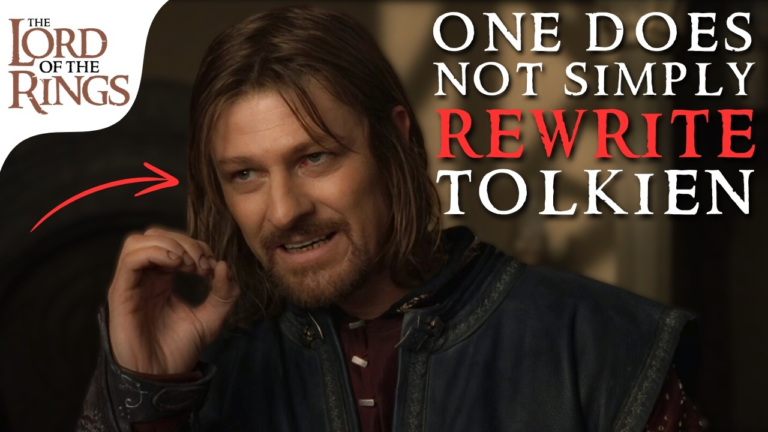

Discover the shocking differences between Tolkien’s Fellowship of the Ring and Peter Jackson’s adaptation – including Gandalf’s epic battle that was completely cut from the films
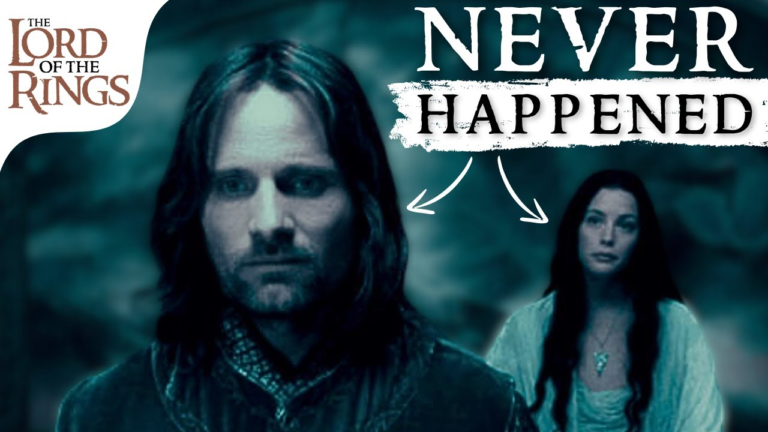
Did you know that the terrifying Nazgûl attack shown in Peter Jackson’s Fellowship of the Ring doesn’t actually happen in Tolkien’s original book? Even more surprising – Gandalf actually fought multiple Ringwraiths at once on Weathertop, but this epic battle was completely removed from the films.
Today we’re diving deep into one of the most significant sections of The Fellowship of the Ring to uncover the major changes Peter Jackson made from the night the hobbits spent in Bree all the way to Frodo’s stabbing on Weathertop. Trust me, there’s far more to this story than what you saw on screen.
We’ll be comparing one crucial chapter of Tolkien’s masterpiece to four scenes from Jackson’s adaptation, covering everything from the true villain of Bree to nearly twenty other changes that transformed the original narrative.
Want to WATCH instead of READ? Check out the video below or CLICK HERE to watch on YouTube!
Peter Jackson’s Version: A Scene-by-Scene Breakdown
In Jackson’s adaptation, this portion of the story unfolds across three main scenes, plus an additional scene showcasing Saruman’s work at Isengard. Here’s what happens in the films:
The Bree Attack: The story begins with the gatekeeper at Bree. Just as he’s about to check who’s at the gate, the Nazgûl burst through, crushing the massive door and the unfortunate gatekeeper beneath it. They storm into the Prancing Pony, heading straight for the hobbits’ room. Raising their swords for what appears to be a murder spree, they’re shocked and enraged to discover they’ve only stabbed pillows and bed sheets – Aragorn has already moved the four hobbits to safety in his room across the street.
The Journey to Weathertop: The next morning, the hobbits and Aragorn venture into the wild to begin their journey to Rivendell. Along the way, they attempt second breakfast, trudge through the Midgewater Marshes while being tormented by flies, and listen to Aragorn hunt and sing songs. Eventually, they reach the ancient fortress of Weathertop.
The Weathertop Encounter: Upon arrival, Aragorn gives the hobbits some daggers before departing to scout the area. Frodo falls asleep and awakens to find the other three hobbits cooking around a fire. He frantically shouts at them to extinguish it, but the damage is done – the Nazgûl have located them. They climb to the top of Weathertop, where the Nazgûl approach and Frodo feels the overwhelming temptation to use the Ring. After putting on the Ring, he’s stabbed by a Nazgûl, and Aragorn arrives just in time to ward off the wraiths with flaming torches.
Character Differences: Who’s Missing and Who’s Added
The characters we see in these film scenes include Harry the Gatekeeper, Aragorn, the four hobbits, Barliman Butterbur, the Nazgûl, and Bill the Pony. However, Tolkien’s original work features several characters that were completely omitted from the adaptation:
Missing from the Films:
- Fatty Bolger: A crucial hobbit who plays a significant role in the Nazgûl’s hunt for Frodo
- Bill Ferny: A sketchy resident of Bree who serves as an agent of Saruman
- Nob: Barliman’s assistant at the Prancing Pony
These omissions, particularly Fatty Bolger and Bill Ferny, represent significant plot changes that we’ll explore in detail later.
Timeline Differences: When Events Really Happened
The timeline shifts between book and film are particularly notable in two key areas:
Gandalf’s Timeline
In Jackson’s version, we see Gandalf still imprisoned on top of Orthanc in Isengard, and we’re meant to assume that after Gwaihir rescues him, he flies straight to Rivendell. However, in Tolkien’s work, Gandalf had actually escaped nearly a month prior and was traveling the same road to Rivendell, just a few days ahead of the hobbits. Most importantly, Gandalf arrived at Weathertop three days before the hobbits and Aragorn got there, where he engaged in an epic battle with the Nazgûl.
Saruman’s Industrial Revolution
The bonus scene showing Saruman’s transformation of Isengard presents another timeline discrepancy. Jackson’s film suggests that Saruman doesn’t officially begin his efforts for Sauron until after he imprisons Gandalf. In reality, Saruman was already far ahead of the curve, pumping out orcs and weapons by the time Gandalf came to him for counsel.
Location Differences: The Missing Crickhollow
There’s only one major location difference, but it’s significant: Crickhollow. This location appears at the beginning of the book chapter but is completely absent from the films. Crickhollow was Frodo’s new home in the books, and its omission removes an entire subplot involving Fatty Bolger and the Nazgûl’s search for Frodo.
Major Plot Changes: The Real Story Behind the Scenes
Now let’s dive into the substantial plot differences, presented in chronological order:
The Crickhollow Incident
The films completely skip what happens to Fatty Bolger at Crickhollow. In the books, the Nazgûl had been deceived into believing Frodo was at his new home. One night, Fatty heard horses approaching and saw the Nazgûl coming. He ran out the back door, sounding the Horn of Buckland – essentially an alarm system warning the area of invaders. The Nazgûl broke into Crickhollow, found it empty, and fled as the citizens of Buckland came out to fight. This was the moment the Nazgûl officially knew Frodo was no longer in the Shire.
The Truth About the Bree Attack
Here’s the shocking revelation: The Nazgûl attack shown in the films never actually happens in the books. It’s unclear whether it was a Ringwraith or a man who ransacked the hobbits’ room. The Nazgûl don’t break down the front gate either – though ironically, if they had killed Harry the Gatekeeper, it would have been justified since he was potentially an agent of Sauron.
Bill Ferny: The Missing Antagonist
Bill Ferny was a sketchy man who served as an agent of Saruman, communicating with both strange persons and at least one Nazgûl. Because of him, the hobbits nearly lost their lives in the Prancing Pony, as Bill had informed his associates where they were staying. His absence from the films removes this entire subplot of internal betrayal.
The Pony Situation
In the books, Aragorn doesn’t explain what the Ringwraiths are while the hobbits stay in his room. Instead, they fast-forward to the next morning when the hobbits discover their room destroyed and Barliman Butterbur tells them all the ponies were let loose from the stable. Desperately needing transportation, they buy the only pony in town – which belonged to Bill Ferny, who sold it at three times its worth. This pony becomes Bill the Pony, who stays with them until the Fellowship reaches Moria.
Weather and Geography
The snow-covered terrain shown in the films during their journey is technically possible but unlikely for October. Jackson used this to give the impression of traveling a long distance, though the actual timeline suggests different weather conditions.
Second Breakfast Scene
The famous second breakfast scene in the marshes doesn’t happen in the books – it was created specifically for the films. However, Aragorn throwing an apple at Pippin is a nod to a previous moment when they’re leaving Bree, where Sam gets upset at Bill Ferny’s taunts and throws an apple at him, hitting him on the head.
The Marshes Mix-Up
When they’re in the marshes being eaten alive by flies, Merry asks, “What do they eat when they can’t get hobbit?” In the books, Sam actually says this line.
Beren and Lúthien Timeline
After Aragorn returns from hunting in the marshes, he sings about Beren and Lúthien. In Tolkien’s work, this story is told later while the group is already at Weathertop, when Sam asks to hear about the elves. Jackson’s placement was actually more cinematically appropriate than disrupting the Weathertop plot.
The Missing Battle: Gandalf vs. Nazgûl
This is perhaps the most significant omission. After leaving the marshes and seeing Weathertop in the distance, they notice flashes of light on it. Sam asks what it is, and Aragorn says he doesn’t know. Later we discover that the light they saw was an epic battle between Gandalf and multiple Nazgûl on Weathertop. This incredible display of Gandalf’s power was completely cut from the films, which is unfortunate since movie Gandalf lacks many of the impressive moments he has in the books.
Saruman’s True Motivations
The dialogue between Sauron and Saruman doesn’t happen in the books, though we can assume they had conversations we don’t hear about. More importantly, the films portray Saruman as far more loyal to Sauron than in the books. By this point in the original story, Saruman had his eyes set on finding the Ring and defeating Sauron with it so he could rule Middle-earth himself. He’s less of Sauron’s commander and more of a second antagonist.
The Weathertop Arrival
When they arrive at Weathertop in the books, they immediately head to the top where Aragorn sees tracks, burn marks, and the aftermath of a fight. He also finds a rock with a rune on it, deciphering it as a message from Gandalf saying he’d been there three days prior. This is when we learn that the lights they saw nights before were from Gandalf’s encounter with the Nazgûl.
The Fire Debate
While on top of the fortress, Frodo and Aragorn see figures in the distance they believe to be Nazgûl. They head back down and start a fire, as Aragorn says it will be good defense against the enemy. This differs significantly from the movie:
- First, they never find the aftermath of a fight in the films
- Second, Frodo is very much against having a fire in the movie
- Third, Aragorn gives them daggers in the movie, but this never happens in the books since they already have the daggers from the Barrow Downs with Tom Bombadil
The Nazgûl Attack Details
The final Nazgûl attack has only a couple of changes between book and movie:
- They already had the fire lit in the books, and Aragorn was with them
- Aragorn doesn’t even use a sword while fighting them in the books – he just takes burning logs and swings them around (which we do see in the movie)
- Frodo still gets stabbed, and the chapter ends with Frodo passing out while Aragorn fights off the Nazgûl
The Verdict: Rating Peter Jackson’s Changes
There are almost too many changes to count between Tolkien’s original work and Peter Jackson’s adaptation. While both versions are incredible in their own right, and adapting a written work inevitably requires changes, it’s fascinating to explore all the small details Tolkien wrote that we miss when we only watch the movies.
Rating: 4 out of 5
The most significant missed opportunity was not incorporating Gandalf’s fight with the Nazgûl somehow, or at least mentioning it when Frodo meets up with Gandalf in Rivendell. This battle showcases just how epic Gandalf is, which we don’t get to see until much later in the movies.
For True Tolkien Fans
If you want to experience the full richness of Tolkien’s original vision, consider checking out Andy Serkis’ narration of the books on Audible. His incredible performance provides a lower barrier to entry for those who have watched the movies but haven’t yet delved into the books. Read along with me! 📖 Claim Andy Serkis’ narration of “The Fellowship of the Ring” on Audible *for FREE:* https://www.audibletrial.com/factorfantasyfellowship 👈 Every free trial supports the channel!
The differences between Tolkien’s The Fellowship of the Ring and Peter Jackson’s adaptation reveal just how much depth and complexity exists in the original work. While the films are masterful in their own right, understanding these changes gives us a deeper appreciation for both versions of this beloved story.
What do you think? Were these changes necessary for the film adaptation, or do you wish some of these moments – particularly Gandalf’s battle with the Nazgûl – had made it to the screen? The debate continues among Tolkien fans worldwide, and that’s part of what makes this story so enduringly fascinating.
Ep. 6: The Real Fool of Middle-earth: How Barliman Butterbur Nearly Ended Frodo’s Quest
Ep. 8: Was Frodo Weak In The Movies? | A Side By Side Comparison Of The Fellowship Of The Ring Book & Movie